Restrictions for Tennessee
Review Supervised Release restrictions in each of the federal districts and the Sex Offender Registry requirements for the state of Tennessee
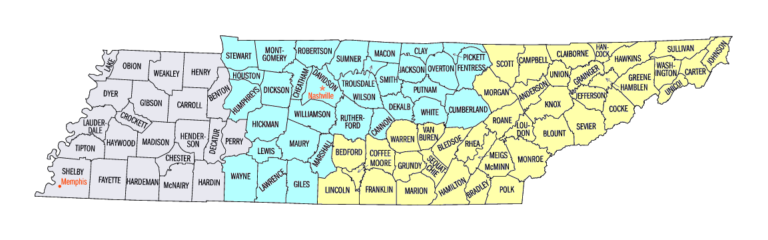
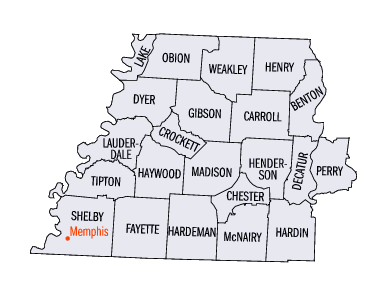
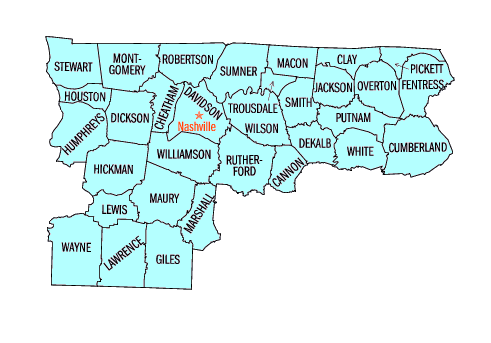
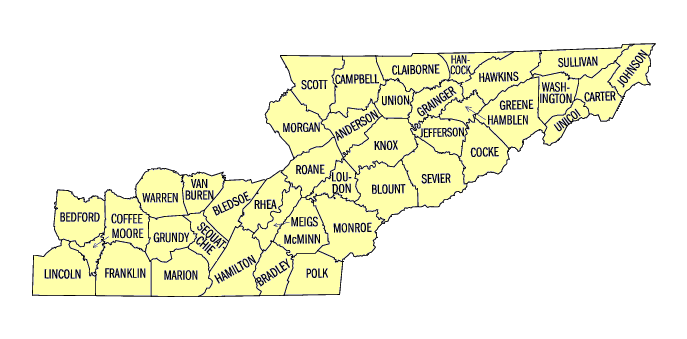

TN Code § 40-39-207
(a) (1) Except as otherwise provided in subdivision (a)(3), unless a plea was taken in conjunction with § 40-35-313, no sooner than ten (10) years after termination of active supervision on probation, parole, or any other alternative to incarceration, or no sooner than ten (10) years after discharge from incarceration without supervision, an offender required to register under this part may file a request for termination of registration requirements with TBI headquarters in Nashville. If the person is required to register under this part due to a plea taken in conjunction with § 40-35-313, an offender required to register under this part may file a request for termination of registration upon successful completion of a term of judicial diversion pursuant to § 40-35-313 and upon receiving an order from a court of competent jurisdiction signifying the successful completion of the term of judicial diversion and the dismissal of charges pursuant to § 40-35-313.
(g) (2) An offender required to register under this part shall continue to comply with the registration, verification and tracking requirements for the life of that offender, if that offender:
(A) Has one (1) or more prior convictions for a sexual offense, as defined in § 40-39-202, regardless of when the conviction or convictions occurred;
(B) Has been convicted of a violent sexual offense, as defined in § 40-39-202; or
(C) Has been convicted of an offense in which the victim was a child of twelve (12) years of age or less.
TN Code § 40-39-217
(a) (1) Any county, metropolitan form of government or municipality may, by a two-thirds (⅔) vote of the legislative body, choose to establish a community notification system whereby certain residences, schools and child-care facilities within the county, metropolitan form of government or municipality are notified when a person required to register pursuant to this part as a sexual offender or violent sexual offender resides, intends to reside, or, upon registration, declares to reside within a certain distance of such residences, schools and child-care facilities.
(2) The legislative body of any county, metropolitan form of government or municipality that enacts a community notification system pursuant to this subsection (a) may, at the same time as the system is established, enact a notification fee of not more than fifty dollars ($50.00) per year from each offender in the county, metropolitan form of government or municipality for the purpose of defraying the costs of the community notification. The notification fee shall be collected at the same time as the one-hundred-fifty-dollar administrative fee collected pursuant to § 40-39-204(b).
(b) Forms of notification a county, metropolitan form of government or municipality may elect to establish include:
(1) Notification by the sheriff’s office or police department to residents, schools and child-care facilities located within a specified number of feet from the offender’s residence;
(2) A community notification flyer, whether made by regular mail or hand delivered, to all legal residences within the specified area;
(3) Posting a copy of the notice in a prominent place at the office of the sheriff and at the police station closest to the declared residence of the offender;
(4) Publicizing the notice in a local newspaper, or posting electronically, including the internet;
(5) Notifying homeowners associations within the immediate area of the declared residence of the offender; or
(6) Any other method reasonably expected to provide notification.
(c) Nothing in this section shall be construed as prohibiting the Tennessee bureau of investigation, a sheriff, or a chief of police from providing community notification under this section electronically or by publication or periodically to persons whose legal residence is more than the applicable distance from the residence of an offender.
TN Code § 40-39-211
(a) (1) While mandated to comply with the requirements of this chapter, no sexual offender, as defined in § 40-39-202, or violent sexual offender as defined in § 40-39-202, shall knowingly establish a primary or secondary residence or any other living accommodation or knowingly accept employment within one thousand feet (1,000′) of the property line of any public school, private or parochial school, licensed day care center, other child care facility, public park, playground, recreation center, or public athletic field available for use by the general public.
(e) Changes in the ownership or use of property within one thousand feet (1,000′) of the property line of an offender’s primary or secondary residence or place of employment that occur after an offender establishes residence or accepts employment shall not form the basis for finding that an offender is in violation of the residence restrictions of this section.
TN Code § 40-39-211
(a) (1) While mandated to comply with the requirements of this chapter, no sexual offender, as defined in § 40-39-202, or violent sexual offender as defined in § 40-39-202, shall knowingly establish a primary or secondary residence or any other living accommodation or knowingly accept employment within one thousand feet (1,000′) of the property line of any public school, private or parochial school, licensed day care center, other child care facility, public park, playground, recreation center, or public athletic field available for use by the general public.
(e) Changes in the ownership or use of property within one thousand feet (1,000′) of the property line of an offender’s primary or secondary residence or place of employment that occur after an offender establishes residence or accepts employment shall not form the basis for finding that an offender is in violation of the residence restrictions of this section.
Yes.
TN Code § 40-39-206
(d) For any offender convicted in this state of a sexual offense or violent sexual offense, as defined by this part, that requires the offender to register pursuant to this part, the information concerning the registered offender set out in subdivisions (d)(1)-(16) shall be considered public information. If an offender from another state establishes a residence in this state and is required to register in this state pursuant to § 40-39-203, the information concerning the registered offender set out in subdivisions (d)(1)-(16) shall be considered public information regardless of the date of conviction of the offender in the other state. In addition to making the information available in the same manner as public records, the TBI shall prepare and place the information on the state’s internet home page. This information shall become a part of the Tennessee internet criminal information center when that center is created within the TBI. The TBI shall also establish and operate a toll-free telephone number, to be known as the “Tennessee Internet Criminal Information Center Hotline,” to permit members of the public to call and inquire as to whether a named individual is listed among those who have registered as offenders as required by this part. The following information concerning a registered offender is public:
(10) The name and address of any institution of higher education in the state at which the offender is employed, carries on a vocation or is a student;
While offenders must register online identifiers [TN Code § 40-39-203 (i) (17)], this information is not included on the public registry.
Yes, with a designation known to law enforcement.
TN Code § 40-39-213
(a) Every offender required to register pursuant to this part who is a resident of this state, and who is eligible, shall be responsible for obtaining a valid driver license or photo identification card that has been properly designated by the department of safety pursuant to § 55-50-353. Every offender eligible to receive the license or identification card shall always have the license or identification card in the offender’s possession. If the offender is ineligible to be issued a driver license or photo identification card, the department shall provide the offender some other form of identification card or documentation that, if it is kept in the offender’s possession, will satisfy the requirements of this section and § 55-50-353; such identification must be kept in the offender’s possession at all times. If any offender is determined to be indigent, an identification card or other documentation in lieu of an identification card shall be issued to the offender at no cost.
TN Code § 55-50-353
(a) When the department issues or renews a driver license or photo identification card to a sexual offender, violent sexual offender or violent juvenile sexual offender as required by § 40-39-213, the driver license or photo identification card shall bear a designation sufficient to enable a law enforcement officer to identify the bearer of the license or card as a sexual offender, violent sexual offender or violent juvenile sexual offender.
TN Code § 40-39-201
(b)(7) The offender is subject to specified terms and conditions that are implemented at sentencing or, at the time of release from incarceration, that require that those who are financially able must pay specified administrative costs to the appropriate registering agency, which shall retain one hundred dollars ($100) of the costs for the administration of this part and the investigation of sexual offenses, including the purchase of specialized equipment for use in the investigation of sexual offenses, and must be reserved for such purposes at the end of each fiscal year, with the remaining fifty dollars ($50.00) of fees to be remitted to the state treasury to be deposited into the general fund of the state; provided, that a juvenile offender required to register under this part shall not be required to pay the administrative fee until the offender reaches eighteen (18) years of age;
TN Code § 40-39-217
(a) (2) The legislative body of any county, metropolitan form of government or municipality that enacts a community notification system pursuant to this subsection (a) may, at the same time as the system is established, enact a notification fee of not more than fifty dollars ($50.00) per year from each offender in the county, metropolitan form of government or municipality for the purpose of defraying the costs of the community notification. The notification fee shall be collected at the same time as the one-hundred-fifty-dollar administrative fee collected pursuant to § 40-39-204(b).
TN Code § 40-39-203
(a) (1) Within forty-eight (48) hours of establishing or changing a primary or secondary residence, establishing a physical presence at a particular location, becoming employed or practicing a vocation or becoming a student in this state, the offender shall register or report in person, as required by this part. Likewise, within forty-eight (48) hours of release on probation or any alternative to incarceration, excluding parole, the offender shall register or report in person, as required by this part.
TN Code § 40-39-202
(18) “Secondary residence” means a place where the person abides, lodges, resides or establishes any other living accommodations in this state for a period of fourteen (14) or more days in the aggregate during any calendar year and that is not the person’s primary residence; for a person whose primary residence is not in this state, a place where the person is employed, practices a vocation or is enrolled as a student for a period of fourteen (14) or more days in the aggregate during any calendar year; or a place where the person routinely abides, lodges or resides for a period of four (4) or more consecutive or nonconsecutive days in any month and that is not the person’s primary residence, including any out-of-state address;
(32) “Within forty-eight (48) hours” means a continuous forty-eight-hour period, not including Saturdays, Sundays or federal or state holidays.
TN Code § 40-39-203
(a) (1) Within forty-eight (48) hours of establishing or changing a primary or secondary residence, establishing a physical presence at a particular location, becoming employed or practicing a vocation or becoming a student in this state, the offender shall register or report in person, as required by this part. Likewise, within forty-eight (48) hours of release on probation or any alternative to incarceration, excluding parole, the offender shall register or report in person, as required by this part.
TN Code § 40-39-202
(18) “Secondary residence” means a place where the person abides, lodges, resides or establishes any other living accommodations in this state for a period of fourteen (14) or more days in the aggregate during any calendar year and that is not the person’s primary residence; for a person whose primary residence is not in this state, a place where the person is employed, practices a vocation or is enrolled as a student for a period of fourteen (14) or more days in the aggregate during any calendar year; or a place where the person routinely abides, lodges or resides for a period of four (4) or more consecutive or nonconsecutive days in any month and that is not the person’s primary residence, including any out-of-state address;
(32) “Within forty-eight (48) hours” means a continuous forty-eight-hour period, not including Saturdays, Sundays or federal or state holidays.