Restrictions for Michigan
Review Supervised Release restrictions in each of the federal districts and the Sex Offender Registry requirements for the state of Michigan
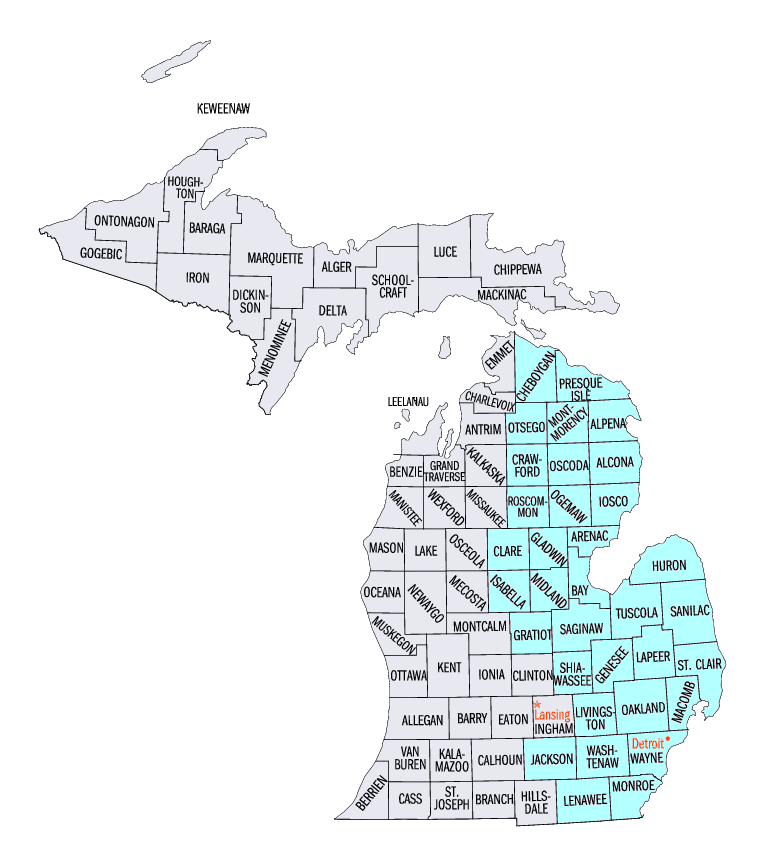
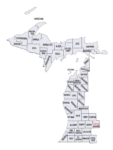
Below you will find information on standard conditions of supervision and travel restrictions, as well as sex offender registry requirements.
Always follow the conditions and restrictions given to you by your U.S. Probation Officer.
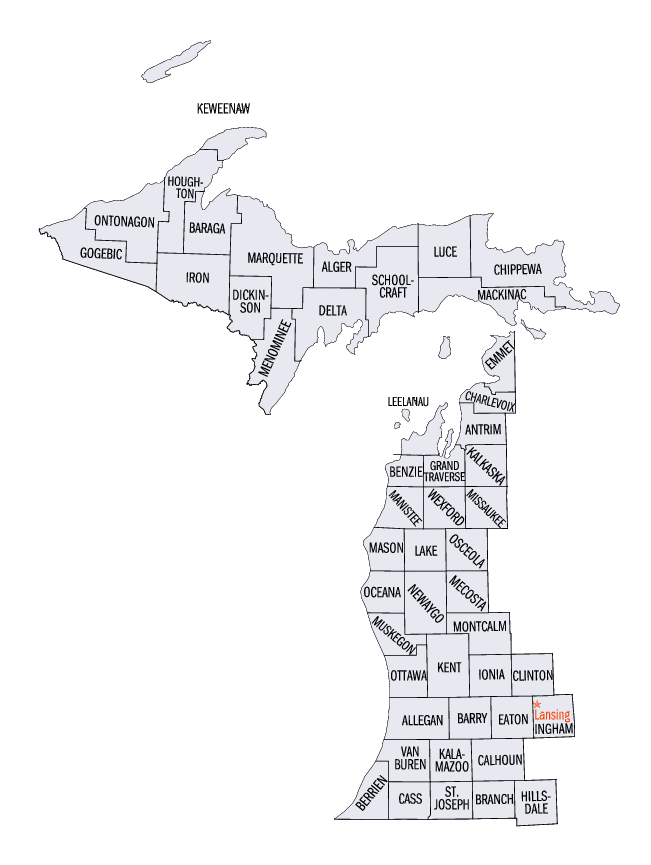
While on supervision, you are allowed to travel freely within the Western District of Michigan. To travel outside of the district, approval is required from your probation officer or the court. All international travel requests must be approved by the court. Failure to do so may result in a violation of your supervision.
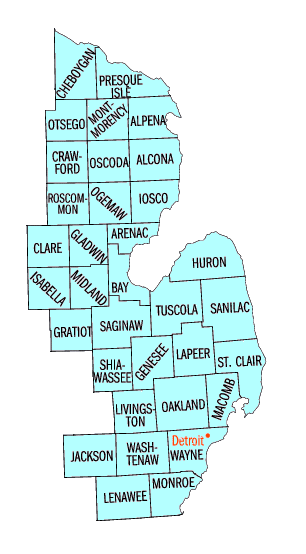
Persons currently under supervision in the Eastern District of Michigan can travel between the counties in the district. Travel outside of these counties must be approved in writing, and in advance, by your assigned Probation Officer at least two weeks in advance unless the travel is resulting from an emergency.
Relocation requests must be discussed and approved by your assigned Probation Officer before any moves are made.
Every state and U.S. territory requires those convicted of sex offenses to be added to a registry to be monitored and tracked after their release back into the community. Information about the offender is collected and shared with local and federal authorities, as well as the general public. Requirements and restrictions are often placed on registered sex offenders. That registration process is unique in each state and U.S. territory.
The Sex Offender Registration and Notification Act (SORNA) was passed in 2006 as part of the Adam Walsh Child Protection and Safety Act to provide federal standards for jurisdictions to follow. SORNA calls for states and U.S. territories to meet minimum requirements for sex offender registration and notification.
While SORNA’s guidelines streamlined registration and notification requirements across the country, these requirements are far from uniform. Each jurisdiction determines the details of their own registration process. This leaves a patchwork of rules for sex offenders that vary widely depending on where a registrant lives or works.
Probation Information Network developed a list of questions regarding the sex offender registration requirements across the country. These are questions that might concern the public, victims and their advocates, or those who are facing registration or are currently registered and their loved ones. We then searched the statutes or code of each jurisdiction for the laws surrounding sex offender registration and notification. Where necessary, we consulted with the law enforcement agency in charge of the jurisdiction’s registry to provide clear and concise answers to the following questions:
How long must a sex offender remain on the registry? The length of time a sex offender must comply with registration requirements varies widely depending on the jurisdiction where the registrant lives, and the level of the offense committed. All but 2 jurisdictions offer a path for eventual removal from the registry for at least some of their registrants.
Every jurisdiction has passive community notification in the form of a public sex offender registry website. Concerned citizens are free to search the website and can sign up for email notifications if a sex offender moves into their neighborhood. Some jurisdictions go even further and require active notification, where either law enforcement or the offender themselves is required to directly notify the immediate community that a sex offender is in the area. This can take many forms, including electronic, mail, or in-person notification, publication in local newspapers, and community meetings.
Are there any restrictions on where a registered sex offender can live? Some jurisdictions restrict registrants from living within a measured distance of certain places. This restriction could be for all registrants, or only for higher-level offenders or those under supervision. Some jurisdictions do not have a state-wide restriction but do allow local jurisdictions to enact their own.
Registered sex offenders are usually restricted from certain types of employment, and from working at establishments that specifically cater to minors. Some jurisdictions go even further and restrict registrants from working within a measured distance of certain places.
Returning citizens of every type need to find employment upon reentry, and sex offenders are no exception. Some jurisdictions include registrants’ employment information on the public registry website. This could be the employer’s address or in some cases the name of the employer.
Some jurisdictions require registered sex offenders to report any identifiers they use online, such as email addresses and social media user names. In some jurisdictions that information is included on the public registry website, separate from the registrant’s profile, in a feature that allows the public to search by specific identifiers.
Some jurisdictions require a state-issued ID, such as a driver’s license, to be labeled to identify the holder as a registered sex offender. This label could be the words “Sex Offender” printed on the ID in a prominent place or a more subtle designation known to law enforcement.
Is there a fee to register as a sex offender? Some jurisdictions pass on some of their administrative costs to the registrants. This could be a one-time fee paid only upon initial registration, or an ongoing fee paid annually or quarterly. Some jurisdictions charge a fee every time a registrant updates their information.
Does a sex offender have to register if they work or go to school in a different state? It depends on the state, and how long the registrant will be there. Some jurisdictions require registrants to notify authorities immediately, while others allow limited stays without requiring registration. Registrants currently under supervision usually need permission from their Parole or Probation Officer before traveling and should always consult their supervising officer.
Can a registered sex offender go on vacation? Does a sex offender have to register if they visit a different state? It depends on the state, and how long the registrant will be there. Some jurisdictions require registrants to notify authorities immediately, while others allow limited stays without requiring registration. Registrants currently under supervision usually need permission from their Parole or Probation Officer before traveling and should always consult their supervising officer.
The answers provided are taken directly from the laws found on the state or territory’s legislative website or, where necessary, from the website of the law enforcement agency in charge of the jurisdiction’s registry. In some cases, we contacted state or territory officials for clarification and have directly quoted those conversations.
While we stand by our research, it is for informational purposes only. It should not be considered legal advice and, while we strive to provide accurate and up to date information, it is not guaranteed to be complete or correct. We provide links to each jurisdiction’s legislative and law enforcement websites and maintain a directory of lawyers who specialize in sex offender registration laws. For those currently under supervision, consult with your Parole or Probation Officer for guidance.
MI Comp L § 28.725
(11) Except as otherwise provided in this section and section 8c, a tier I offender shall comply with this section for 15 years.
(12) Except as otherwise provided in this section and section 8c, a tier II offender shall comply with this section for 25 years.
(13) Except as otherwise provided in this section and section 8c, a tier III offender shall comply with this section for life.
(14) The registration periods under this section exclude any period of incarceration for committing a crime and any period of civil commitment.
No.
None.
Act No. 295, Public Acts of 2020, repealed these restrictions effective March 24, 2021.
None.
Act No. 295, Public Acts of 2020, repealed these restrictions effective March 24, 2021.
Yes.
MI Comp L § 28.728
(2) The department shall maintain a public internet website separate from the law enforcement database described in subsection (1) to implement section 10(2) and (3). Except as provided in subsection (4), the public internet website must contain all of the following information for each individual registered under this act:
(d) The address of each of the individual’s employers. For purposes of this subdivision, “employer” includes a contractor and any individual who has agreed to hire or contract with the individual for his or her services. Information under this subsection must include the address or location of employment if different from the address of the employer.
While offenders must register all electronic mail addresses and internet identifiers [MI Comp L § 28.728 (1) (i)], this information is not included on the public registry.
No.
MI Comp L § 28.725a
(6) Except as otherwise provided in section 5b, an individual who reports as prescribed under subsection
(3) shall pay a $50.00 registration fee as follows:
(a) Upon initial registration.
(b) Annually following the year of initial registration. The payment of the registration fee under this subdivision must be made at the time the individual reports in the first reporting month for that individual as set forth in subsection (3) of each year in which the fee applies, unless an individual elects to prepay an annual registration fee for any future year for which an annual registration fee is required. Prepaying any annual registration fee must not change or alter the requirement of an individual to report as set forth in subsection (3). The payment of the registration fee under this subdivision is not required to be made for any registration year that has expired before January 1, 2014 or to be made by any individual initially required to register under this act after January 1, 2023. The registration fee required to be paid under this subdivision must not be prorated on grounds that the individual will complete his or her registration period after the month in which the fee is due.
(c) The sum of the amounts required to be paid under subdivisions (a) and (b) must not exceed $550.00.
MI Comp L § 28.725b
(3) If an individual required to pay a registration fee under this act is indigent, the registration fee is waived for a period of 90 days. The burden is on the individual claiming indigence to prove the fact of indigence to the satisfaction of the local law enforcement agency, sheriff’s department, or department post where the individual is reporting.
MI Comp L § 28.722
As used in this act:
(f) “Indigent” means an individual to whom 1 or more of the following apply:
(i) The individual has been found by a court to be indigent within the last 6 months.
(ii) The individual qualifies for and receives assistance from the department of health and human services food assistance program.
(iii) The individual demonstrates an annual income below the current federal poverty guidelines.
MI Comp L § 28.724
(6) All of the following shall register with the local law enforcement agency, sheriff’s department, or the department not more than 3 business days after becoming domiciled or temporarily residing, working, or being a student in this state:
(a) Subject to section 3(1), an individual convicted in another state or country on or after October 1, 1995 of a listed offense as defined before September 1, 1999.
(b) Subject to section 3(2), an individual convicted in another state or country of an offense added on September 1, 1999 to the definition of listed offenses.
(c) Subject to section 3(1), an individual convicted in another state or country of a listed offense before October 1, 1995 and, subject to section 3(2), an individual convicted in another state or country of an offense added on September 1, 1999 to the definition of listed offenses, who is convicted of any other felony on or after July 1, 2011.
(d) An individual required to be registered as a sex offender in another state or country regardless of when the conviction was entered.
MI Comp L § 28.724
(6) All of the following shall register with the local law enforcement agency, sheriff’s department, or the department not more than 3 business days after becoming domiciled or temporarily residing, working, or being a student in this state:
(a) Subject to section 3(1), an individual convicted in another state or country on or after October 1, 1995 of a listed offense as defined before September 1, 1999.
(b) Subject to section 3(2), an individual convicted in another state or country of an offense added on September 1, 1999 to the definition of listed offenses.
(c) Subject to section 3(1), an individual convicted in another state or country of a listed offense before October 1, 1995 and, subject to section 3(2), an individual convicted in another state or country of an offense added on September 1, 1999 to the definition of listed offenses, who is convicted of any other felony on or after July 1, 2011.
(d) An individual required to be registered as a sex offender in another state or country regardless of when the conviction was entered.