Restrictions for Indiana
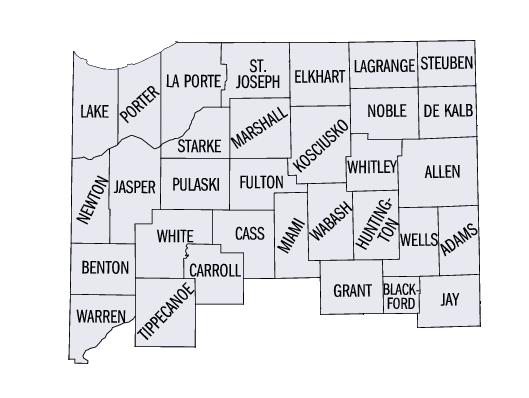
Review Supervised Release restrictions in each of the federal districts and the Sex Offender Registry requirements for the state of Indiana
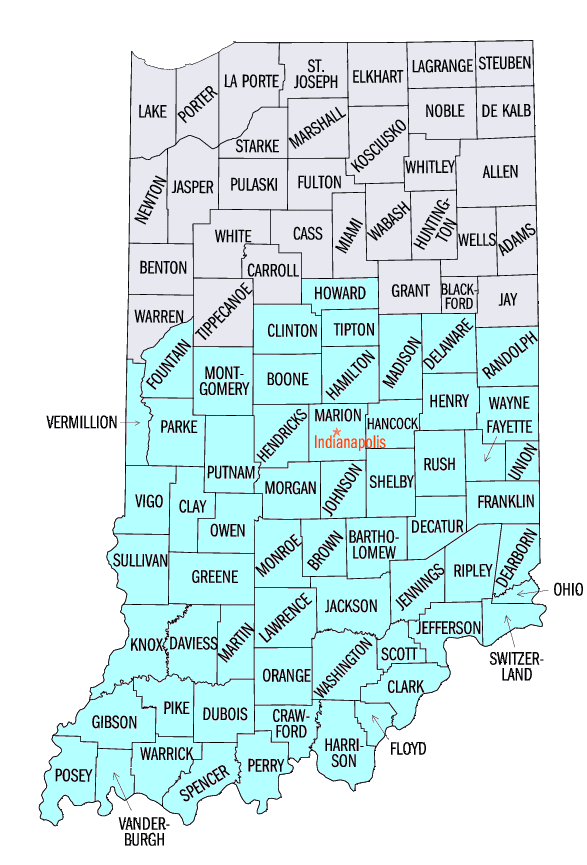

IC 11-8-8-19
(a) Except as provided in subsections (b) through (f), a sex or violent offender is required to register under this chapter until the expiration of ten (10) years after the date the sex or violent offender:
(1) is released from a penal facility (as defined in IC 35-31.5-2-232) or a secure juvenile detention facility of a state or another jurisdiction;
(2) is placed in a community transition program;
(3) is placed in a community corrections program;
(4) is placed on parole; or
(5) is placed on probation;
for the sex or violent offense requiring registration, whichever occurs last. The registration period is tolled during any period that the sex or violent offender is incarcerated. The registration period does not restart if the offender is convicted of a subsequent offense. However, if the subsequent offense is a sex or violent offense, or an offense under IC 11-8-8-17, a new registration period may be imposed in accordance with this chapter. The department shall ensure that an offender who is no longer required to register as a sex or violent offender is notified that the obligation to register has expired, and shall ensure that the offender’s information is no longer published to the public portal of the sex and violent offender registry Internet web site established under IC 36-2-13-5.5.
(b) A sex or violent offender who is a sexually violent predator is required to register for life.
(c) A sex or violent offender who is convicted of at least one (1) offense under section 5(a) of this chapter that the sex or violent offender committed:
(1) when the person was at least eighteen (18) years of age; and
(2) against a victim who was less than twelve (12) years of age at the time of the crime;
is required to register for life.
(d) A sex or violent offender who is convicted of at least one (1) offense under section 5(a) of this chapter in which the sex offender:
(1) proximately caused serious bodily injury or death to the victim;
(2) used force or the threat of force against the victim or a member of the victim’s family, unless the offense is sexual battery as a Class D felony (for an offense committed before July 1, 2014) or a Level 6 felony (for a crime committed after June 30, 2014); or
(3) rendered the victim unconscious or otherwise incapable of giving voluntary consent;
is required to register for life.
(e) A sex or violent offender who is convicted of at least two (2) unrelated offenses under section 5(a) of this chapter is required to register for life.
(f) A person who is required to register as a sex or violent offender in any jurisdiction shall register for the period required by the other jurisdiction or the period described in this section, whichever is longer.
No.
IC 35-42-4-11
(b) As used in this section, “reside” means to spend more than three (3) nights in:
(1) a residence; or
(2) if the person does not reside in a residence, a particular location;
in any thirty (30) day period.
(c) An offender against children who knowingly or intentionally:
(1) resides within one thousand (1,000) feet of:
(A) school property, not including property of an institution providing post-secondary education;
(B) a youth program center;
(C) a public park; or
(D) a day care center licensed under IC 12-17.2;
(2) establishes a residence within one (1) mile of the residence of the victim of the offender’s sex offense; or
(3) resides in a residence where a child care provider (as defined by IC 31-33-26-1) provides child care services;
commits a sex offender residency offense, a Level 6 felony.
IC 35-42-4-10
(c) A sexually violent predator or an offender against children who knowingly or intentionally works for compensation or as a volunteer:
(1) on school property;
(2) at a youth program center;
(3) at a public park;
(4) as a child care provider (as defined by IC 31-33-26-1);
(5) for a child care provider (as defined by IC 31-33-26-1); or
(6) as a provider of:
(A) respite care services and other support services for primary or family caregivers; or
(B) adult day care services;
commits unlawful employment by a sexual predator, a Level 6 felony. However, the offense is a Level 5 felony if the person has a prior unrelated conviction based on the person’s failure to comply with any requirement imposed on an offender under IC 11-8-8.
Yes.
IC 36-2-13-5.5
(b) The public portal of the Indiana sex and violent offender registry Internet web site must include the following information for every sex or violent offender who is required to register under IC 11-8-8-7:
(3) If the person is required to register under IC 11-8-8-7(a)(2) or IC 11-8-8-7(a)(3), the address of each of the sex or violent offender’s employers in Indiana, the address of each campus or location where the sex or violent offender is enrolled in school in Indiana, and the address where the sex or violent offender stays or intends to stay while in Indiana.
While offenders must register online identifiers [IC 11-8-8-8 (a) (7)], this information is not included on the public registry.
No.
IC 36-2-13-5.6
(a) The legislative body of a county may adopt an ordinance:
(1) requiring the local law enforcement authority (as defined in IC 11-8-8-2) to collect:
(A) an annual sex or violent offender registration fee; and
(B) a sex or violent offender address change fee;
(b) If an ordinance is adopted under subsection (a), the legislative body of the county shall establish the amount of the annual sex or violent offender registration fee. However, the annual sex or violent offender registration fee may not exceed fifty dollars ($50).
(c) If an ordinance is adopted under subsection (a), the legislative body of the county shall establish the amount of the sex or violent offender address change fee. However, a sex or violent offender address change fee may not exceed five dollars ($5) per address change.
(d) The legislative body of the county shall determine the manner in which the local law enforcement authority shall collect the annual sex or violent offender registration fee and the sex or violent offender address change fee. However, the annual sex or violent offender registration fee may be collected only one (1) time per year. The sex or violent offender address change fee may be collected each time a sex or violent offender registers an address change with the local law enforcement authority.
IC 11-8-8-7
(a) Subject to section 19 of this chapter, the following persons must register under this chapter:
(2) A sex or violent offender who works or carries on a vocation or intends to work or carry on a vocation full time or part time for a period:
(A) exceeding seven (7) consecutive days; or
(B) for a total period exceeding fourteen (14) days;
during any calendar year in Indiana regardless of whether the sex or violent offender is financially compensated, volunteered, or is acting for the purpose of government or educational benefit.
(3) A sex or violent offender who is enrolled or intends to be enrolled on a full-time or part-time basis in any public or private educational institution, including any secondary school, trade, or professional institution, or postsecondary educational institution.
IC 11-8-8-7
(a) Subject to section 19 of this chapter, the following persons must register under this chapter:
(1) A sex or violent offender who resides in Indiana. A sex or violent offender resides in Indiana if either of the following applies:
(A) The sex or violent offender spends or intends to spend at least seven (7) days (including part of a day) in Indiana during a one hundred eighty (180) day period.
(B) The sex or violent offender owns real property in Indiana and returns to Indiana at any time.